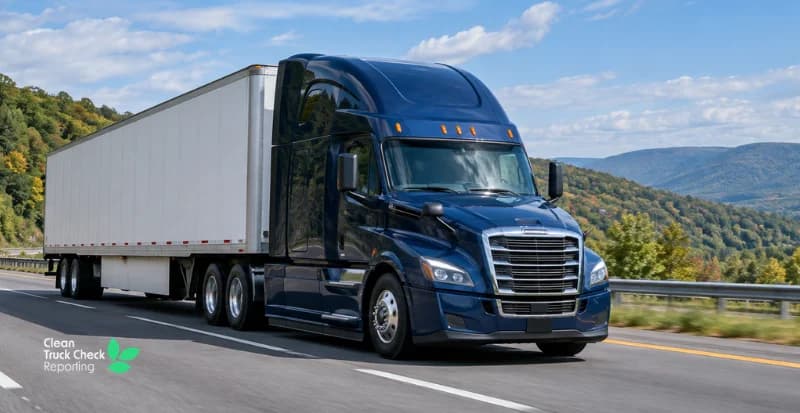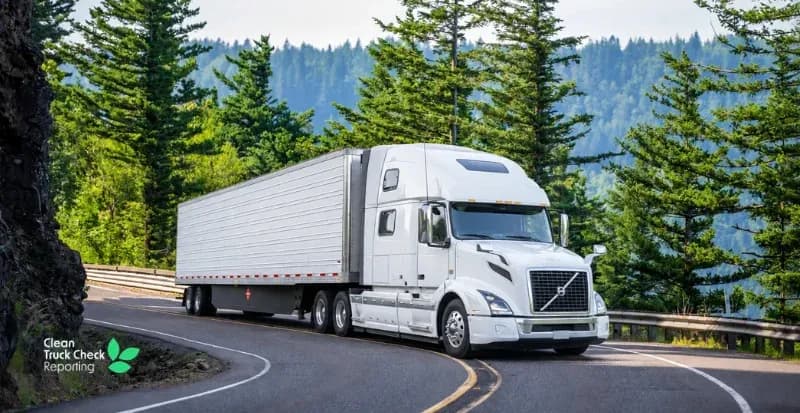
Your truck may have Texas plates, a Nevada registration, or an Arizona address on the paperwork. Once it starts operating on California roads, however, the license plate alone does not decide which California rules apply. That is especially important with Clean Truck Check.
California's heavy-duty emissions program applies to many qualifying trucks operating in the state. This can include vehicles registered in other states. Federal operating credentials, IRP registration, and an out-of-state plate do not automatically satisfy California emissions requirements.
For carriers taking occasional California loads or adding the state to regular routes, registration is only part of the picture. The key question is whether the vehicle is subject to CARB Clean Truck Check or other California requirements.
Can Out-of-State Trucks Operate in California?
Yes. Out-of-state carriers can operate in California, but they must follow all federal and state requirements that apply to their operation. Interstate carriers must also follow FMCSA rules on operating authority, driver qualifications, hours of service, and vehicle safety. Once in California, carriers may also face state-specific rules from CARB, the California Highway Patrol, and the DMV.
CARB states that the program covers nearly all diesel and alternative-fuel vehicles over 14,000 pounds GVWR. This includes out-of-state vehicles operating on California public roads.
Interstate vs. Intrastate Operations in California
Interstate transportation generally involves freight moving across state lines or as part of a broader interstate movement. Intrastate transportation takes place entirely within one state. That distinction can affect carrier permits, safety rules, registration, and other operating requirements. It does not, however, determine Clean Truck Check applicability by itself.
For Clean Truck Check, CARB focuses on the vehicle, its fuel type and weight, and where it operates. An out-of-state truck entering California may still have to meet the same emissions requirements as a California-based vehicle.
What Is CARB Compliance in California?
“CARB compliance” is a broad phrase. It can refer to several California Air Resources Board rules depending on the vehicle and operation. For this article, the main program is CARB Clean Truck Check, formally California's Heavy-Duty Inspection and Maintenance program. Clean Truck Check identifies heavy-duty vehicles with emissions-control problems and requires covered vehicles to maintain compliance.
For vehicles subject to the program, CARB says owners generally must:
report the vehicle in the Clean Truck Check Vehicle Inspection System, or CTC-VIS
pay the annual compliance fee
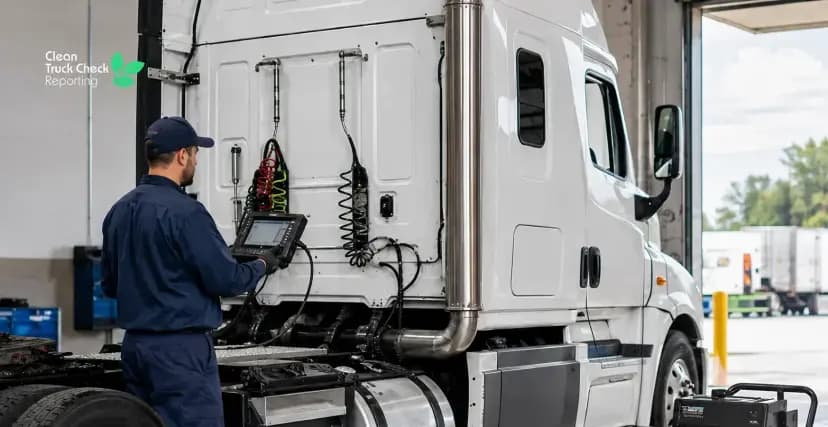
submit the required passing emissions test
clear outstanding enforcement violations
California requirements may still apply to trucking companies based outside the state.
Do CARB Regulations Apply to Out-of-State Trucks?
Yes, when the vehicle falls within the regulation. CARB states that Clean Truck Check applies to affected vehicles even when they have out-of-state registration. The program includes vehicles registered outside the state as well as in-state commercial vehicles, government fleets, buses, hybrids, and other covered heavy-duty vehicles. This remains particularly relevant in 2026. CARB's current FAQ addresses the January 27, 2026 U.S. EPA partial disapproval related to California's State Implementation Plan and explains that the decision did not remove Clean Truck Check requirements for vehicles registered outside California. CARB continues to state that out-of-state vehicles operating on California roads must comply when they are otherwise subject to the program.
So, an out-of-state plate does not exempt a vehicle from CARB regulations.
Which Trucks Are Subject to Clean Truck Check Requirements?
The basic applicability test is fairly straightforward. CARB says Clean Truck Check requirements apply to nearly all diesel and alternative-fuel heavy-duty vehicles with a manufacturer GVWR over 14,000 pounds that operate on California public roads and highways.
Affected vehicles can include:
commercial trucks
buses
hybrid heavy-duty vehicles
government vehicles
privately owned heavy-duty vehicles
single-vehicle fleets
vehicles registered outside California
“Alternative fuel” under the program includes fuels such as natural gas, propane, ethanol, and methanol. Clean Truck Check does not cover certain zero-emission vehicles, including electric and hydrogen-powered vehicles. Other exemptions and special categories also exist, so carriers with unusual equipment should check current CARB guidance rather than relying only on the basic weight threshold. For covered vehicles, emissions testing must also follow the program's testing requirements. Depending on engine model year and fuel type, that may involve OBD testing, opacity testing, or a required visual inspection.
What If You Only Operate in California Occasionally?
An occasional trip into California does not automatically exempt a vehicle from emissions requirements. This is one of the more important points for owner-operators and regional carriers that may only accept a few California loads each year. CARB bases Clean Truck Check applicability on whether a covered vehicle operates on California public roads and highways. CARB does not require a California base or a minimum number of operating days for Clean Truck Check to apply. That means a truck can remain registered and primarily operated in another state while still having California emissions obligations when it enters California.
CARB also requires carriers to report covered vehicles in CTC-VIS and ensure compliance before operating in California. A limited five-day pass may apply in qualifying situations, but it is not a general exemption for occasional carriers. CARB describes it as a specific program option with eligibility and reporting requirements rather than automatic permission for any out-of-state truck to operate for five days.
So, even if your fleet enters California only a few times per year, do not base CARB compliance on how often you enter the state.
It is “Is this vehicle subject to Clean Truck Check when it operates here?”
What California Requirements Can Apply Beyond Clean Truck Check?
Clean Truck Check addresses heavy-duty emissions compliance. It does not replace every other federal or California credential a motor carrier may need. Depending on the operation, carriers may also encounter requirements involving a CA number, California Motor Carrier Permit, registration, fuel taxes, safety inspections, and other programs. These requirements should be evaluated separately because each has its own purpose and applicability rules.
CA Number, MCP, and BIT Inspection
A CA number is a carrier identification number issued by the California Highway Patrol. CHP states that it is used to identify motor carriers operating commercially on California highways. California DMV uses the CA number as the identifier for the state's Motor Carrier Permit program. The California Motor Carrier Permit, or MCP, is issued by DMV. DMV describes it as evidence that the carrier has registered its CA number and met applicable statutory requirements for commercial motor-carrier operations in California. Interstate carriers can also fall within the MCP system, although statutory exceptions and the exact operation matter.
The California BIT inspection program is different again. BIT stands for Basic Inspection of Terminals. CHP uses the program to evaluate carrier safety and maintenance at regulated terminals. CHP guidance says property-carrying motor carriers with terminals in California are enrolled through the carrier-identification process, and BIT inspections focus on vehicle maintenance, required records, and terminal safety compliance. For an out-of-state carrier, this distinction matters. A truck may need Clean Truck Check because it travels on California roads even if the carrier has no California terminal. BIT, by contrast, is tied much more closely to regulated terminal and motor-carrier safety requirements.
What Should Carriers Check Before Entering California?
Before dispatching a covered truck into California, review the operation from more than one compliance angle. First, determine whether the vehicle falls within CARB Clean Truck Check based on its GVWR, fuel type, engine configuration, and applicable exemptions. If it does, confirm that it is correctly reported in CTC-VIS and that the annual fee and required emissions testing are current. CARB states that subject vehicles must be compliant before operating on California public roads.
For most vehicles on the regular compliance schedule in 2026, testing occurs semiannually, although certain vehicle categories follow different schedules. The actual deadline displayed in CTC-VIS should be treated as the controlling date.
Then look beyond emissions. Depending on the carrier and trip, confirm whether California-specific carrier identification, MCP, registration, fuel-tax, or safety requirements also apply. For an occasional California load, this review is particularly important because credentials that work for interstate travel in other jurisdictions do not necessarily answer every California-specific question. And an ordinary out-of-state “smog check” should not simply be assumed to replace Clean Truck Check. CARB requires applicable emissions compliance tests to be performed under its program by a CARB-credentialed tester using approved testing equipment.
CARB Compliance for Out-of-State Carriers
The main rule for out-of-state carriers is easy to remember: California compliance follows the vehicle and its operation, not just the state printed on the license plate. If a qualifying diesel or alternative-fuel heavy-duty truck over 14,000 pounds GVWR operates on California public roads, Clean Truck Check may apply even when the vehicle is registered and based somewhere else. Covered owners generally need to keep their CTC-VIS reporting, annual compliance fee, emissions testing, and enforcement status current. Occasional California operations should not automatically be treated as exempt, and federal credentials do not replace applicable CARB requirements.
At the same time, Clean Truck Check is only the emissions side of the picture. A CA number, California Motor Carrier Permit, BIT obligations, registration credentials, or other requirements may also become relevant depending on how the carrier operates. Before accepting a California load, confirm the vehicle's Clean Truck Check status first, then review the other California requirements that apply to the specific trip. It is much easier to sort out those questions before the truck reaches the state line than after compliance becomes a roadside problem.